Posted August 21, 2026

By Matt Insley
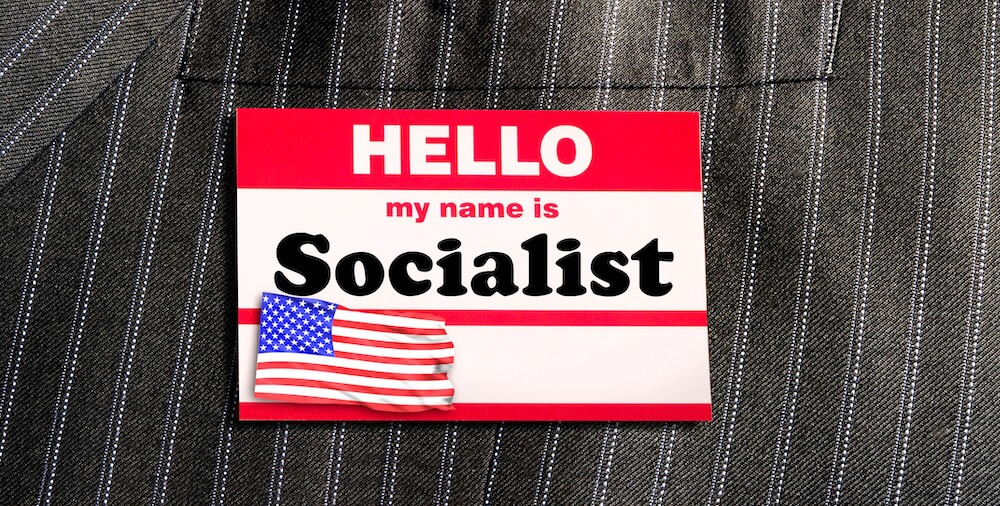
120,000 Socialists Have a Plan
Ten years ago, you could have fit practically every member of the Democratic Socialists of America (DSA) into a minor-league baseball stadium.
About 6,000 people belonged to the organization in 2015.
As of July 4, 2026, DSA says its membership hit an all-time high of 120,000.
That means DSA’s ranks have grown roughly twentyfold in a decade.
One important distinction: DSA isn’t technically part of the Democratic Party. In fact, the organization explicitly says, “We are not a political party, but a non-profit activist organization.”
In practice, many DSA candidates run as Democrats, compete in Democratic primaries and, once elected, hold office as Democrats.
That unusual arrangement has allowed DSA to build influence inside the Democratic Party
And if you want to understand what DSA is doing with that influence, Chicago is a good place to start.
Last August, more than 1,300 DSA delegates and alternates descended on the city for the organization’s three-day national convention.
They came from chapters across the country. They argued over resolutions and elected national leaders.
Rep. Rashida Tlaib took the stage as the convention’s keynote speaker.
There were merchandise tables piled with DSA shirts and tote bags. One table displayed posters for Zohran Mamdani, then the Democratic nominee for mayor of New York City.
Even the location carried a message.
Chicago was the site of the 1886 Haymarket Massacre, a seminal event in American labor history. DSA’s convention organizers explicitly invoked Haymarket while welcoming delegates to the city.
But the most important business in Chicago wasn’t happening at the merch tables.
Your Rundown for Friday, August 21, 2026...
The Party Hiding Inside the Party
Delegates approved a political strategy that went well beyond simply electing more socialists.
DSA adopted tougher standards for candidates seeking its endorsement.
Under its national endorsement criteria, candidates should have a history of involvement with DSA, publicly identify as socialists, uphold the organization’s platform, recruit new members and caucus with other DSA officeholders.
It also approved experiments with “independent ballot lines” — ways for socialist candidates to appear before voters under their own political identity rather than relying exclusively on the Democratic Party label.
And it established a national “Socialists in Office” network designed to connect DSA-backed officeholders around the country and coordinate their political work after they’re elected.
Put those pieces together and the strategy becomes clearer.
DSA is trying to build some of the machinery of a political party — without first having to build a new political party.
But one line in DSA’s national endorsement criteria tells you more about the strategy than anything else.
Candidates should consider themselves “socialist organizers first, and legislators second.”
Read that one again. Because it gets to the heart of what DSA is building.
Political organizations endorse candidates all the time. They donate money, knock on doors and run ads. Then the candidate wins and heads to Washington, the statehouse or city hall.
DSA is experimenting with something different, and some local chapters make that relationship remarkably explicit.
Charleston DSA, for instance, requires endorsed candidates to agree to “co-govern with the chapter.”
Candidates are expected to meet with chapter representatives, coordinate campaign strategy and remain accountable to the organization.
Which brings us back to those 120,000 members — and the political program their organization is trying to advance.
DSA’s national program calls for aggressive wealth taxes, universal rent control and public ownership of the largest corporations and essential industries.
And none of this requires DSA to replace the Democratic Party.
Jim Rickards recently described the strategy this way: “The idea is that you don’t have to destroy institutions. With patience, you can take them over from the inside.”
Which puts the Chicago 2025 convention in a different light.
The candidate rules and Socialists in Office network weren’t just political housekeeping.
They were the machinery for turning an ideology into policy.
And when those policies concern your taxes, your property and your investments, it pays to know who’s operating the machine.
Market Rundown for Friday, August 21, 2026
S&P 500 futures are up 0.40% to 7,690.
Oil is up 0.35% to $87.15 for a barrel of WTI.
Gold’s up 1.75% to $4,650.80 per ounce.
And Bitcoin is up 5.60% to $76,755.

Trump Claims Deed to Hormuz
Posted August 19, 2026
By Matt Insley

Airfares Up 25%
Posted August 17, 2026
By Byron King

AOC Wants a Do-Over
Posted August 14, 2026
By Matt Insley

Goatherders Rewrote the Rules of War
Posted August 12, 2026
By Emily Clancy

The Fauci Follies
Posted August 10, 2026
By Matt Insley