Posted June 22, 2026

By Matt Insley
China Couldn't Crush This Company
In 2014, CEO Amanda Lacaze inherited a disaster of a company.
Lynas Rare Earths had spent billions building a mine and processing facilities in Western Australia and Malaysia.
The company’s shares had collapsed more than 90%. Creditors were circling. Many investors assumed bankruptcy was only a matter of time.
China, meanwhile, spent years flooding the rare-earth market with supply — crushing prices and making life difficult for would-be competitors.
Most mining stories end there. This one didn’t.
Instead of chasing growth, Lacaze focused on survival. She cut costs, restructured and kept the company alive long enough to benefit from a shift few investors saw coming.
Governments started asking an uncomfortable question: What happens if the world’s dominant supplier of strategic minerals is also your chief geopolitical rival?
That question eventually changed everything for Lynas.
Your Rundown for Monday, June 22, 2026...
The Pentagon’s Supply-Chain Bet
Rare earths, for instance, are used in the permanent magnets found in missile guidance systems, radar equipment, fighter aircraft, electric motors and countless other technologies.
Mining them is one challenge. Processing them is another. And that’s where China pressed its advantage.
But after more than a decade of effort, Lynas emerged as the largest rare-earth producer outside China and one of the only companies capable of performing large-scale rare-earth separation beyond Chinese borders.
That progress eventually attracted Pentagon support.
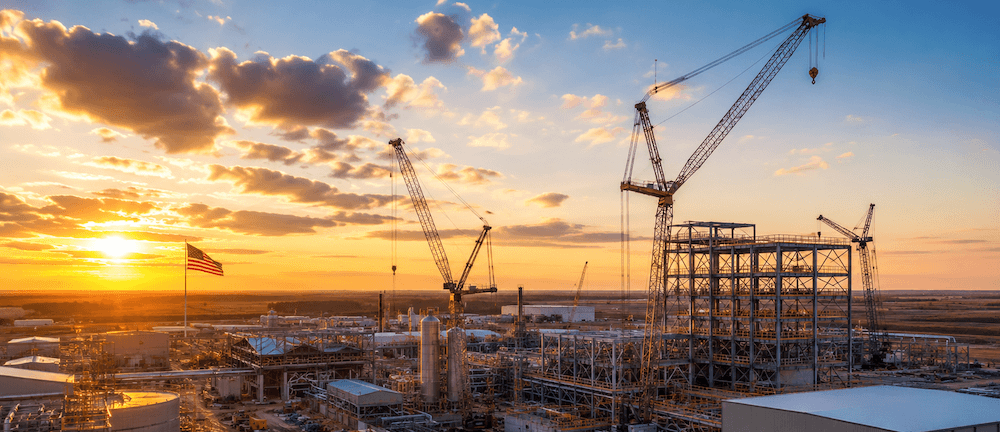
In 2020, the U.S. Department of Defense awarded Lynas an initial contract to design a heavy rare-earth processing facility in Texas.
By 2023, total Defense Department funding commitments had reached about $258 million as Washington sought to establish the first commercial-scale heavy rare-earth separation capability outside China.
The focus wasn’t mining. It was processing.
That’s the critical bottleneck in the rare-earth supply chain. While rare earth deposits can be found around the world, converting those materials into separated oxides suitable for magnets, electronics and defense systems requires specialized facilities that China spent decades building.
The Texas project later encountered rising costs and engineering challenges, forcing both Lynas and the Pentagon to rethink their approach. Rather than relying solely on construction subsidies, Washington began exploring a different solution: creating guaranteed demand.
Earlier this year, Lynas announced a preliminary agreement with the Department of Defense worth approximately $96 million. The arrangement included planned purchases of rare-earth products and a floor-price mechanism designed to support domestic production even during periods of market weakness.
In effect, the Pentagon concluded that securing an alternative supply chain required more than building a factory. It required ensuring that factory could remain economically viable for years to come.
In other words, Washington reached a conclusion that would have sounded unorthodoxl twenty years ago.
That realization sits at the heart of Jim Rickards’ American Birthright thesis. For decades, efficiency was the goal. Production moved wherever costs were lowest.
Today, resilience matters more.
The Lynas story demonstrates that America and its allies can rebuild capabilities once lost. It may take time, but the trend is unmistakable.
That’s why America’s birthright resonates with so many investors. Rare earths may be one chapter of that story. They almost certainly won’t be the last.
Market Rundown for Monday, June 22, 2026
S&P 500 futures are slightly in the green at 7,572.
Oil’s down 0.75% to $76 for a barrel of WTI.
Gold is down 0.40% to $4,228.20 per ounce.
And Bitcoin’s up 1% to $64,800.

Jim Rickards: Inflation Is Misunderstood
Posted July 10, 2026
By Matt Insley

Poker > Wall Street
Posted July 08, 2026
By Matt Insley

A Butcher. A Veteran. A Steelworker.
Posted July 06, 2026
By Matt Insley

The Philadelphia Philosopher
Posted July 03, 2026
By Matt Insley

America’s 7 Superpowers
Posted July 01, 2026
By Matt Insley
