Posted June 25, 2025

By Matt Insley
Iran’s Energy Chokepoint: Strait of Hormuz Fallout
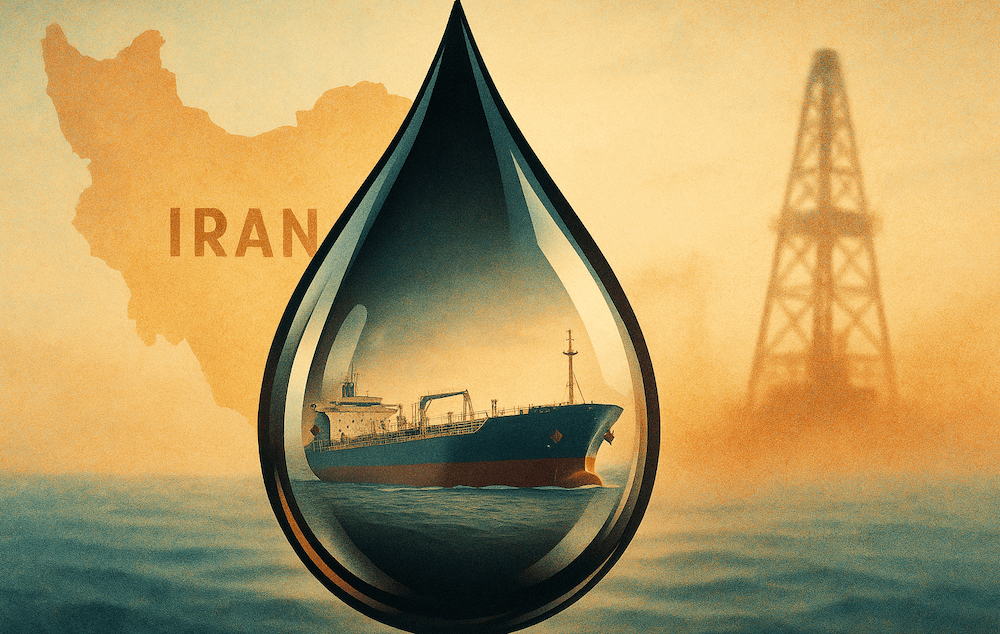
If Iran closes the Strait of Hormuz — a narrow waterway connecting the Persian Gulf to the rest of the world — the ripple effects would be swift and severe.
This passage is a vital artery for global oil trade, with about 20% of the world’s oil moving through it daily. Even a temporary shutdown would disrupt energy markets worldwide, causing oil prices to spike.
For the U.S., the immediate pain would be felt at the pump. Higher fuel prices could slow economic growth, fuel inflation and rattle financial markets. Analysts, in fact, warn of a potential 10–20% market correction if the strait is closed.
While workarounds exist — such as rerouting oil overland from Gulf terminals — these are costly and limited in scale. The broader danger is that a prolonged disruption could lead to a global energy crisis, with cascading effects on everything from shipping to manufacturing.
But the consequences for Iran could be even more severe.
Oil exports are Iran’s economic lifeblood, and closing the strait would prevent Iran from shipping oil to its major customers. It would be an act of self-harm that could devastate Iran’s economy.
With oil exports already sharply reduced due to the recent Israel-Iran conflict, further isolating itself from global markets would push Iran deeper into an economic crisis.
Energy experts agree: Iran has little to gain and too much to lose by closing the Strait of Hormuz.
Your Rundown for Wednesday, June 25, 2025...
The Monterey Formation: Oil, Gas and America’s Birthright
Economist and former CIA advisor Jim Rickards argues that oil, gas and energy are part of America’s national birthright — a vast inheritance locked beneath U.S. soil, waiting to be unlocked.
One such resource, the Monterey Formation, is a vast geological structure stretching along California’s coast, from San Francisco to Los Angeles.
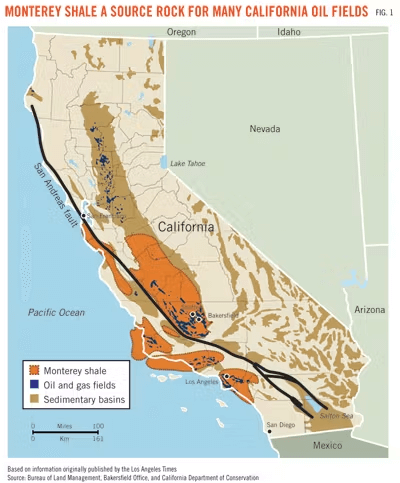
Source: Bureau of Land Management, California Dept. of Conservation
It is best known for its complex mix of rocks formed from ancient marine organisms that have trapped significant oil and gas deposits over millions of years.
These complex structures have allowed the Monterey to act as the primary source rock for most of California’s oil, with an estimated 37 to 38 billion barrels of oil produced to date from reservoirs linked to the Monterey.
However, extracting oil from the Monterey is technically challenging and has been hampered by environmental regulations, technological hurdles and political resistance.
Recent policy changes under the Trump administration have aimed to loosen these regulatory barriers. Executive orders and legal shifts, such as the overturning of the Chevron Doctrine, have made it easier to access federal lands and resources for energy development.
The administration’s focus is on energy abundance and independence, not just efficiency. The question now is whether more blue states — like California — might reconsider their restrictions on energy extraction if regulatory winds continue to shift.
The Strait of Hormuz crisis underscores the risks of dependence on global energy chokepoints. But as Jim argues, America’s true advantage lies beneath its own land — in resources like the Monterey Formation.
While extracting these deposits may be difficult, regulatory reform could unlock their potential, providing jobs, economic growth and a stronger foundation for energy independence.
Market Rundown for Wednesday, June 25, 2025
S&P 500 futures are up 0.10% to 6,150.
Oil is up 0.75%, just under $65 for a barrel of WTI.
Gold is up 0.15% to $3,338.50 per ounce.
And Bitcoin’s up 1.50% to $107,100.

120,000 Socialists Have a Plan
Posted August 21, 2026
By Matt Insley

Trump Claims Deed to Hormuz
Posted August 19, 2026
By Matt Insley

Airfares Up 25%
Posted August 17, 2026
By Byron King

AOC Wants a Do-Over
Posted August 14, 2026
By Matt Insley

Goatherders Rewrote the Rules of War
Posted August 12, 2026
By Emily Clancy
