Posted March 20, 2026

By Matt Insley
No Fertilizer, No Food, No Order
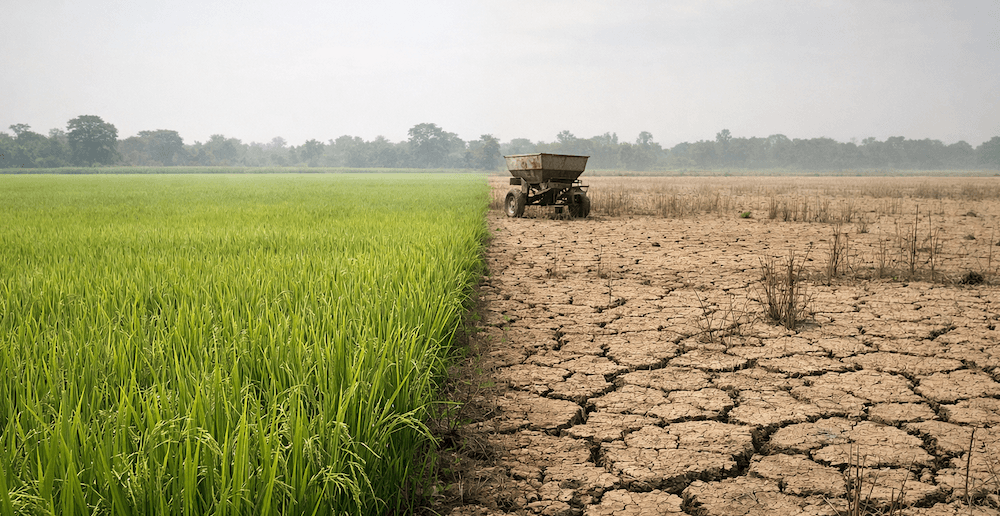
Monday we told you about urea fertilizer. About nitrogen. About how the war in Iran could clear grocery store shelves before you know it.
Today, I want to show you what that actually looks like — not in a chart, not in a futures price, but in a country that’s already lived through it.
Sri Lanka.
If you missed what happened there in 2022, here’s the CliffsNotes version: The island nation of 22 million people came completely unglued.
Your Rundown for Friday, March 20, 2026...
No Fertilizer, No Food, No Order
In Sri Lanka, there were gas lines, blackouts and food shortages.
Thousands of people stormed the president’s official residence, demanding his resignation. A mob burned down the prime minister’s private home. Both officials ultimately fled the country.
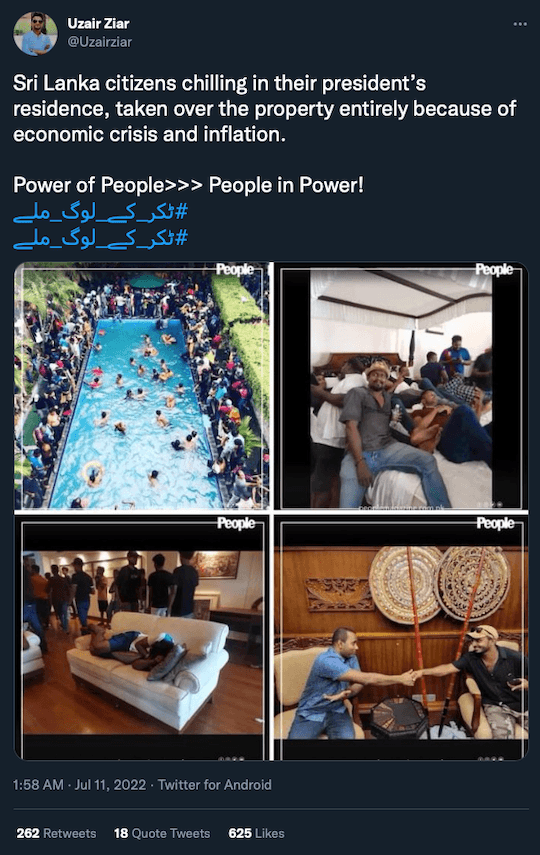
As an outside observer, the entire debacle looked like a sudden political firestorm. But it wasn’t sudden.
The fuse had been lit fourteen months earlier — with a fertilizer ban.
In April 2021, Sri Lankan President Gotabaya Rajapaksa issued an executive order: No more chemical fertilizers (urea and nitrogen among them).
Sri Lanka’s two million farmers were told, effective immediately, they were going organic.
It was hailed in green policy circles as a laudable experiment. In fact, Sri Lanka earned a near-perfect Environmental, Social and Governance (ESG) score of 98 at the time — higher than Sweden’s 96, much higher than the United States’ 51.
By the metrics that mattered to Western institutions and environmental advocates, Sri Lanka was doing everything right.
But what happened next was totally foreseeable:
- Rice production fell 20% within six months of the ban, forcing the government to import $450 million worth of rice to make up the shortfall — while domestic rice prices still surged 50%
- Tea exports, Sri Lanka’s primary source of foreign exchange, collapsed, costing the economy an estimated $425 million.
The government reversed course by November 2021, but the cancer was already metastasizing through the economy.
Inflation approached 60%, and a middle class that the World Bank described as “thriving” in 2019 was being driven back into poverty.
The throughline seems obvious: Remove nitrogen fertilizer from agriculture, and food shortages follow. Shortages beget inflation. Inflation begets instability.
Instability gives rise to the kind of chaos that can end governments.
This week? Sri Lanka’s government announced a four-day work week — for schools, offices, universities — to ration fuel as the Middle East war persists.
Officials warn the conflict could “seriously undermine its efforts to emerge from the economic meltdown of 2022.”
Same country. Same fragility. Four years later.
Which brings us to 2026, when the global threat is geopolitical — a war… closing the waterway… that moves the natural gas… that produces the urea… that feeds the world’s crops.
Threatening the fertilizer that keeps 8 billion people fed.
Market Rundown for Friday, March 20, 2026
S&P 500 futures are down 0.35% to 6,375.
Oil is down 1.25% to $94.95 for a barrel of WTI.
Gold’s up 1.75% to $4,685.60 per ounce.
And Bitcoin is slightly in the green at $70,385.

CA Donkeys Will Pay $10 Gas
Posted April 24, 2026
By Matt Insley

Gold Doesn’t Pick Sides
Posted April 22, 2026
By Matt Insley

Uranium Diplomacy
Posted April 20, 2026
By Matt Insley

Xi’s Zugzwang
Posted April 17, 2026
By Matt Insley

Orange Swan: Chaos Without Camo
Posted April 15, 2026
By Matt Insley