Posted January 07, 2026

By Matt Insley
Okay, I Get Why Robots Have Two Legs
This week at the Consumer Electronics Show in Las Vegas, the most important reveal wasn’t a device or a screen. It was a worker.
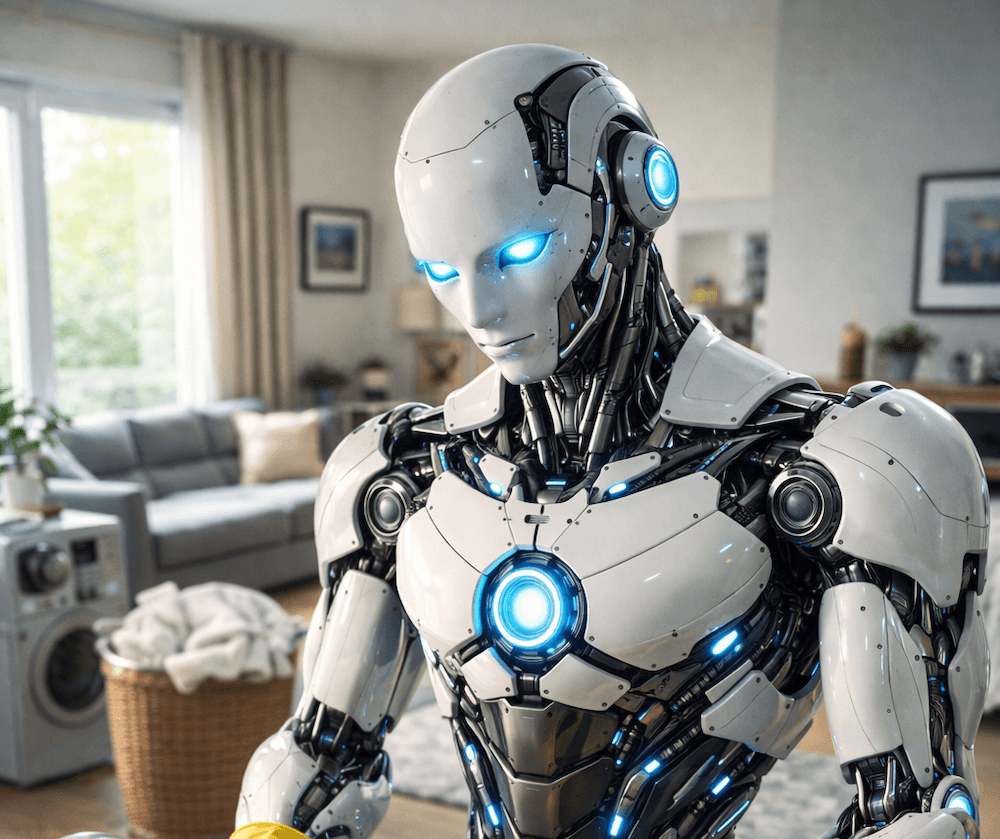
Hyundai Motor Group confirmed plans to roll out humanoid robots across its factories starting in 2028. The robot, Atlas, built by Boston Dynamics, walks on two legs, lifts heavy loads, climbs stairs, opens doors and moves comfortably through spaces designed for people.
That matters more than it sounds.
For a long time, humanoid robots felt like a sideshow. When it came down to it, companies kept coming up with awkward prototypes and lots and lots of hype. James Altucher used to be skeptical, too. Then it clicked…
The world we live and work in was built for humans.
Your Rundown for Wednesday, January 7, 2026...
In a World Built for Humans
The world isn’t built only for humans. Dogs move through doorways without a problem and I’m sure cats take stairs better than we do.
But the built environment has a clear bias. Just look around your home.
Your cabinet handles sit at hand height and your light switches assume an upright reach. Stove knobs, laundry baskets, countertops and shelves are all placed where human arms naturally go. Hallways are wide enough for a person carrying something.
Stairs match a human stride. Tools are shaped for five fingers and a grip.
Even the way boxes are stacked, carts are loaded and workstations are laid out assumes a two-armed, two-legged body that can bend, lift and pivot.
The world does not need to be rebuilt for machines. The worker evolves to fit the world.
Single-purpose machines already exist everywhere. We don’t need a humanoid robot to toast bread or wash dishes… we have toasters and dishwashers already.
But real work isn’t one task. It’s a chain of tasks that happen in messy, human-shaped spaces: move this, carry that, open this door, climb these steps, grab that object, set it here, then do it again and adjust when something changes.
In a world that has been organized around human movement and human ergonomics, a robot that can operate inside that world, without forcing a redesign of buildings and workflows, earns its keep fast.
Hyundai plans to produce up to 30,000 Atlas units annually and lease them through a robot-as-a-service model. Once one robot learns a task, that knowledge can be shared instantly across the fleet.
Humanoid robots won’t feel like a novelty once they’re doing the unglamorous work — the repetitive, heavy, injury-prone tasks that keep factories and warehouses moving.
Which explains why humanoid robots are suddenly much more practical.
They aren’t meant to replace every machine. They exist because general work happens inside spaces optimized for human movement.
And once a few of them are moving boxes, climbing stairs and opening doors without anyone making a fuss, humanoid robots will stop feeling like a big idea altogether and start feeling like just another piece of equipment that happens to walk.
Market Rundown for Wednesday, January 7, 2026
The S&P 500 is down 0.02% to 6,986.50.
Oil is down 0.25% to $56.99 for a barrel of WTI.
Gold is down 0.84% to $4,458.50 per ounce.
And Bitcoin is down 2.30% to $91,548.60.
Fannie Mae Says “Yes” to Bitcoin
Posted March 27, 2026
By Matt Insley

The Stench of Supply Shock
Posted March 25, 2026
By Matt Insley

Gold Had One Job
Posted March 23, 2026
By Matt Insley

No Fertilizer, No Food, No Order
Posted March 20, 2026
By Matt Insley

A New Urban Bloc Fights “Federal Overreach”
Posted March 18, 2026
By Matt Insley
