Posted July 27, 2026

By Matt Insley
Proxy Wars Break Cover
For months, the wars in Ukraine and Iran occupied separate headlines. One unfolded in Eastern Europe. The other centered on the Persian Gulf, the Strait of Hormuz and Israel.
This weekend, those two battlefields may have collided.
The U.S. paused its air campaign against Iran after nearly two weeks of strikes, while Oman brokered talks aimed at preserving a fragile ceasefire and reopening commercial shipping through the Strait of Hormuz.
Iran likewise suspended its retaliatory attacks, although both sides warned the pause could prove short-lived.
Then the conflict took an unexpected turn.
President Volodymyr Zelensky announced what he called “very good results” from Ukrainian long-range operations in the Caspian Sea, saying Ukrainian forces had struck a Russian warship and vessels allegedly transporting Iranian military cargo to Russia.
Iran said one sailor aboard an Iranian commercial vessel was killed and another injured. Tehran condemned the strike as a “hostile and criminal” act, while Foreign Minister Abbas Araghchi warned that it “cannot go unanswered.”
About 10 days ago, Dave Gonigam, managing editor at Paradigm Pressroom’s 5 Bullets, floated a grim possibility: the wars in Ukraine and Iran might eventually merge into a single conflict.
After this weekend, that possibility doesn’t seem so remote.
Your Rundown for Monday, July 27, 2026...
Proxy Wars Breaks Cover
The overlap begins with drones.
For years, Iran has supplied Russia with Shahed-series unmanned aerial vehicles, helping Moscow build a drone capability it has used extensively against Ukrainian infrastructure.
Russia now manufactures its own versions of the Iranian-designed Shahed, but the original technology, manufacturing know-how and supply relationship came from Tehran.
The Caspian Sea matters because it connects northern Iran with southern Russia while avoiding waters patrolled by the U.S. Navy.
Goods can move from Iranian ports such as Bandar Anzali north to Russia's Astrakhan region. From there, cargo enters Russia’s rail, river and road networks.
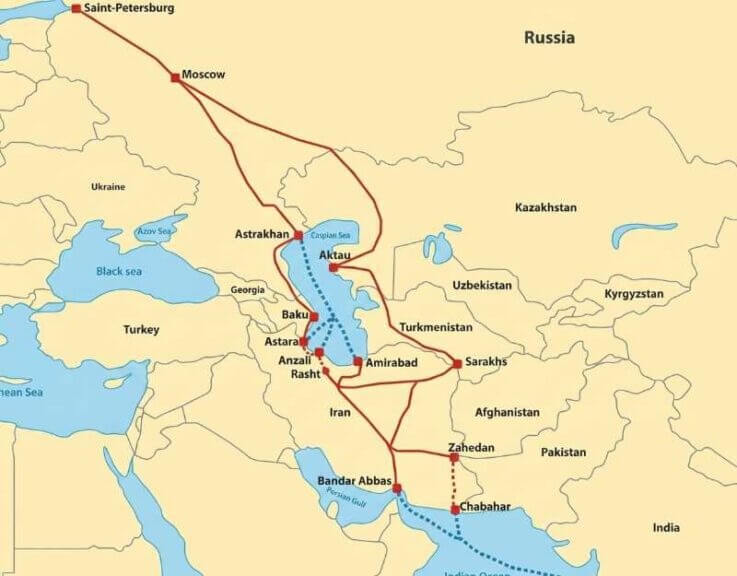
Source: Russia’s Pivot To Asia
To be clear, Iran is not shipping large quantities of crude oil to Russia. Russia has plenty of oil of its own. Roughly 90% of Iran’s crude exports travel south through the Strait of Hormuz, with the overwhelming majority ultimately destined for China.
Instead, the northern route is valuable for a different reason.
Since 2022, the U.S. and EU have sanctioned Iranian companies and networks supplying military equipment to Russia. The Caspian corridor gives Tehran and Moscow an inland trade route that’s harder for Western governments to monitor, sanction or physically interdict.
For years, these relationships played out via proxies and arms transfers. The strike in the Caspian suggests those proxies are becoming combatants in their own right.
Step back, the strategic picture looks like this:
Israel stands behind the campaign against Tehran, while Europe continues financing and equipping Kyiv.
The United States is fighting Iran — while arming Ukraine against Russia.
Russia deepens its military partnership with Iran while using Iranian-designed weapons against Ukraine.
And over the weekend, Ukraine took the fight to an Iranian supply route in the Caspian.
History, meanwhile, suggests a multipolar war rarely arrives with a formal declaration.
It develops when alliances harden, supply routes become targets and retaliation in one theater triggers escalation in another.
Market Rundown for Monday, July 27, 2026
S&P 500 futures are up 0.80% to 7,500.
Oil is down 5.85% to $84 for a barrel of WTI.
Gold is up 0.40% to $4,086.50 per ounce.
And Bitcoin’s up 0.50%, just under $65K.

AOC Wants a Do-Over
Posted August 14, 2026
By Matt Insley

Goatherders Rewrote the Rules of War
Posted August 12, 2026
By Emily Clancy

The Fauci Follies
Posted August 10, 2026
By Matt Insley

The Copper Bull Outlives AI
Posted August 07, 2026
By Matt Insley
Missiles & Misery
Posted August 05, 2026
By Matt Insley