Posted July 30, 2026

By Matt Insley
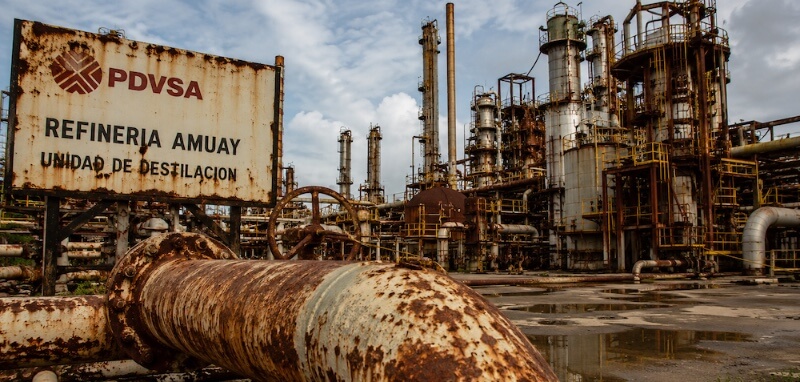
Venezuela’s Rust Belt
When two powerful earthquakes shook Venezuela in late June, the first question for energy markets was obvious: Would the country’s long-awaited oil comeback come to a screeching halt?
The country’s major oil-producing regions, however, escaped serious damage. And Venezuela is producing more oil than it has in years.
As Paradigm’s Matt Badiali — trained geologist and former mining company executive — tells me this week: “Venezuela hit its highest oil production volume since 2019.
“In January 2026, the country produced about 820,000 barrels of oil per day. In June 2026, it stood at 1.23 million barrels per day.”
That’s a remarkable turnaround in just six months.
“The state-run oil company, PDVSA, now has a tailwind behind it,” Matt continues. “Without former president Maduro, it’s free to court foreign investment again.
“And with the war in the Middle East raging, the country looks like a better place for investing.”
That investment is already beginning to materialize.
Italian energy giant Eni is negotiating with PDVSA to develop the Junín 5 field in Venezuela’s Orinoco Oil Belt. This isn’t some marginal oil project.
The Orinoco Belt contains one of the world’s largest accumulations of heavy crude, and Eni believes Junín 5 alone could eventually add roughly 200,000 barrels of oil per day.
At first glance, that’s a classic comeback story. But there’s a catch.
Your Rundown for Friday, July 31, 2026...
This Comeback Has a Catch
For decades, Venezuela operated as an integrated oil producer. It pumped crude, refined much of it at home and exported petroleum products around the world.
Today, only the first part of that equation is coming back.
A recent Reuters investigation found Venezuela’s refining system in severe decline after years of underinvestment and deferred maintenance.
One worker at the country’s 645,000-barrel-per-day Amuay refinery described the sprawling complex in blunt terms: “Everything looks ugly and rusty.”
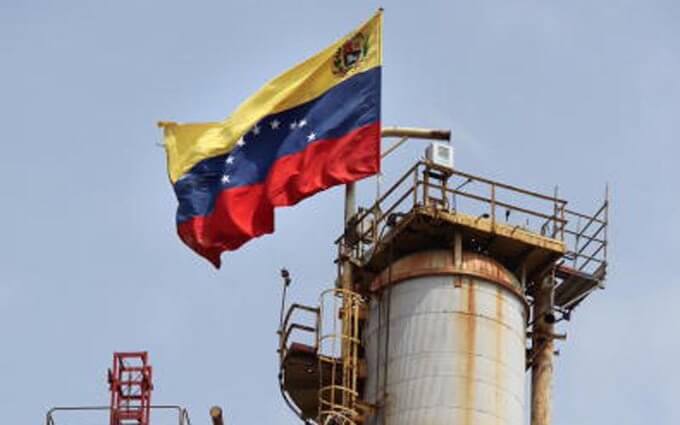
Courtesy: BOE Report, X
Reporters found leaking pipelines, overflowing waste pits, deteriorating equipment and facilities operating at only a fraction of their former capacity.
Rebuilding that infrastructure would likely require tens of billions of dollars and years of work.
“That’s a critical piece of information,” says Matt, “because all oil fields and equipment need capital investment. They need massive investment. And without the refineries, the oil needs to get shipped out of the country.”
That’s where the investment story changes.
The obvious question isn’t who will rebuild Venezuela’s refineries. It’s whether anyone needs to.
The U.S. already has some of the world’s most sophisticated refineries designed to process heavy crude like the oil produced in Venezuela’s Orinoco Belt.
From an economic standpoint, it may make more sense to produce the oil in Venezuela, ship it to existing refineries along the Gulf Coast and capture the higher-margin refining profits there than to spend billions rebuilding aging infrastructure.
In other words, Venezuela may once again become a key oil producer — without ever reclaiming its role as a refining powerhouse.
It may not be the vertically integrated energy giant it once was. Instead, it could become a world-class supplier of heavy crude while refiners elsewhere capture the most profitable part of the business.
For investors, that’s the headline story worth watching.
Market Rundown for Friday, July 31, 2026
S&P 500 futures are up 0.20% to 7,485.
Oil is up 2% to $85.25 for a barrel of WTI.
Gold’s down 1.10% to $4,113.60 per ounce.
And Bitcoin is down 1.65% to $63,645.

120,000 Socialists Have a Plan
Posted August 21, 2026
By Matt Insley

Trump Claims Deed to Hormuz
Posted August 19, 2026
By Matt Insley

Airfares Up 25%
Posted August 17, 2026
By Byron King

AOC Wants a Do-Over
Posted August 14, 2026
By Matt Insley

Goatherders Rewrote the Rules of War
Posted August 12, 2026
By Emily Clancy
