Posted November 02, 2026

By Dan Amoss
Wall Street’s IPO Darling Needs More Juice
[Anthropic, the company behind Claude AI, could go public as soon as mid-November under the ticker ANT, with a rumored $1.5 trillion valuation.
But buried in its IPO paperwork are hundreds of billions of dollars in infrastructure commitments.
That’s a lot of risk for investors to swallow.
Today, Jim Rickards’ chief analyst Dan Amoss explains why he’d skip the Anthropic IPO altogether.
Instead, he’s eyeing an unlikely energy giant that stands to profit from AI’s biggest bottleneck — no matter which chatbot wins the race.]
Wall Street bankers love a big story, especially when fees from a $1.5 trillion IPO are on the line.
Yet if you want to see what corporate desperation looks like, skip the glossy roadshow slides for the planned IPO of Claude AI parent Anthropic.
Instead, go straight to the fine print in the S-1.
Buried under the lofty promises of artificial general intelligence sits a mountain of infrastructure commitments.
Anthropic has mortgaged its future to secure computing capacity. At the core of this financial gamble are approximately $430 billion in commitments involving Broadcom, Google, Amazon and Microsoft.
Many of these arrangements require substantial payments regardless of actual usage, subject to specified contractual exceptions.
Consider the additional commitments, including agreements with AMD, Nscale, Lambda and Google that could require hundreds of billions more as computing capacity becomes available.
Anthropic is trapped in a high-stakes race against the calendar.
If its data center partners cannot [secure enough] high-voltage power, or if revenue growth slows and fails to scale fast enough to cover tens of billions in annual rent, the company’s cash hoard will shrink.
Your Rundown for Monday, November 2, 2026...
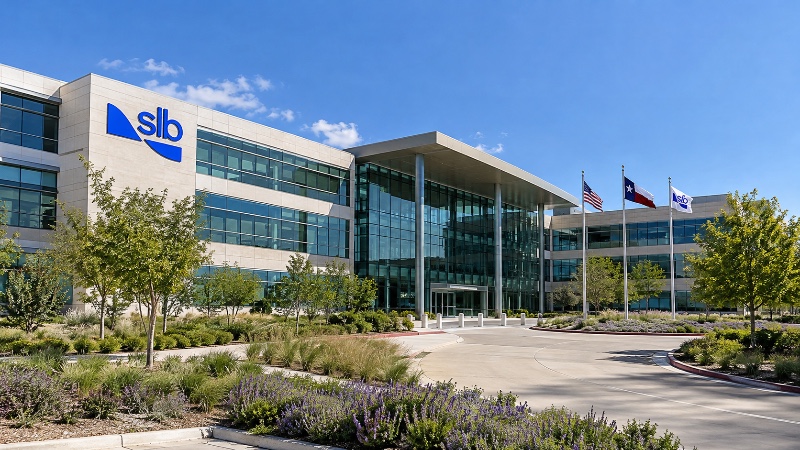
SLB’s Secret Weapon in Shreveport
Investors need to understand why buying shares of Anthropic at a valuation over $1 trillion is a bad deal.
The broader AI ecosystem faces an immediate physical crisis. All of those future compute contracts hinge on one physical commodity: energized electrical capacity.
Right now, silicon chips are piling up while data center developers wait three to seven years just to get regional electric utilities to approve grid interconnection studies.
Even when a developer secures a power purchase agreement, lead times for high-voltage step-up transformers and custom switchgear stretch past three years.
If the buildings do not get power, the entire AI capex boom would grind to a halt.
Hyperscalers and data center developers will pay almost any price to anyone who can bypass the local electric utility and drop a working, cooled power plant onto a concrete pad in months rather than years.
That urgent need brings us to SLB (NYSE: SLB), the global engineering powerhouse formerly known as Schlumberger.
SLB has applied its engineering and manufacturing prowess to help fix the biggest bottleneck limiting the pace of the AI buildout. Think of it as a side hustle that’s on track to becoming a big business.
Outside Shreveport, Louisiana, SLB took over a shuttered General Motors auto plant. It builds complete power and cooling modules on an assembly line. Switchgear, power units and piping are all tested before they leave the building. Crews truck the finished modules straight to the data center.
SLB’s approach cuts field construction timelines by up to 40% and reduces the on-site delays that so often pop up in complex projects.
The numbers confirm it. SLB’s data center revenue has grown from a rounding error in early 2025 to $230 million in the latest quarter.
By year-end, SLB expects to have delivered enough power infrastructure to support two gigawatts of data center capacity — roughly the output of two large nuclear reactors.
In July, SLB struck a deal with Liberty Energy. Liberty drops in modular, gas-fired generators and microgrid controls right on-site. SLB supplies the power and cooling modules. Together, they build a data center power system that runs independently of the local electric grid.
In August, SLB agreed to buy Kelvion, a German maker of industrial cooling gear, for $3.4 billion in cash plus about $700 million in assumed debt. SLB expects the acquisition to more than double its revenue potential per gigawatt delivered.
By 2028, SLB expects this AI construction project division to bring in $4.5 billion to $5 billion in revenue and up to $800 million in adjusted EBITDA.
And SLB gets paid out of the capital budgets Amazon, Google, Microsoft and Meta have already committed. When a hyperscaler signs a hundred-billion-dollar infrastructure deal, that cash flows to SLB to help get AI servers online quickly.
You don’t have to pay a lofty tech multiple for it either. And you get SLB’s fast-growing data center business bolted onto the world’s top oilfield services franchise.
It’s still highly uncertain which companies will be the ultimate winners and losers in the AI competition.
It makes much more sense to buy the company being paid big bucks to fix bottlenecks in the world’s energy supply chain.
Market Rundown for Monday, Nov. 2, 2026
S&P 500 futures are up 0.30% to 7,635.
Oil is down 4% to $99.80 for a barrel of WTI.
Gold is up 0.45% to $3,916.60 per ounce.
And Bitcoin’s up 0.30% to $77,935.

America’s Red Reformation
Posted October 30, 2026
By Matt Insley

Jim Rickards, Unscripted
Posted October 28, 2026
By Matt Insley

Little Marco, Big Question Mark
Posted October 26, 2026
By Matt Insley

Soros and Scott: The Sequel
Posted October 23, 2026
By Matt Insley

Trump Channels Graham Platner
Posted October 21, 2026
By Matt Insley