
Posted February 16, 2026

By Matt Insley
Wall Street’s Secret Society
[Editor’s note: U.S. markets are closed today for Presidents Day — and so we bring you one of the more unusual guest essays we’ve ever published, courtesy of our colleague Mason Sexton.
Mason regales you with the story of a Wall Street secret society dating back over 150 years. Whatever you think you know about how the wealthy and powerful wield their influence, timing was — and still is — everything.]
Starting in 1868, behind a locked door in Manhattan, a handful of America’s most powerful men gathered each month — to study the rhythm of markets.
The ledgers showed fine wine and extravagant dinners. But behind the velvet curtains sat railroad barons, financiers and political kingmakers, occupying 12 chairs.
Membership was permanent. No retirements. When a man died, another inherited his chair.
The monthly ritual trained them to think in cycles: to watch for inflection points, shifts in crowd psychology and the moments when markets drifted furthest from reality.
They called themselves the Zodiac Club.
Leadership centered around the Libra seat — the scales of judgment. And in 1903, that chair was taken by J.P. Morgan.
Morgan understood something most investors still miss:
Timing is power…
Your Rundown for Monday, February 16, 2026...
The Architect of American Power
When railroads collapsed into chaos, for instance, Morgan forced consolidation.
When the Panic of 1893 threatened the financial system, he organized a private rescue for the U.S. Treasury.
During the Panic of 1907, he effectively became a central bank, deciding which institutions survived.
Under Morgan’s leadership, the Zodiac Club evolved into a council of timekeepers.
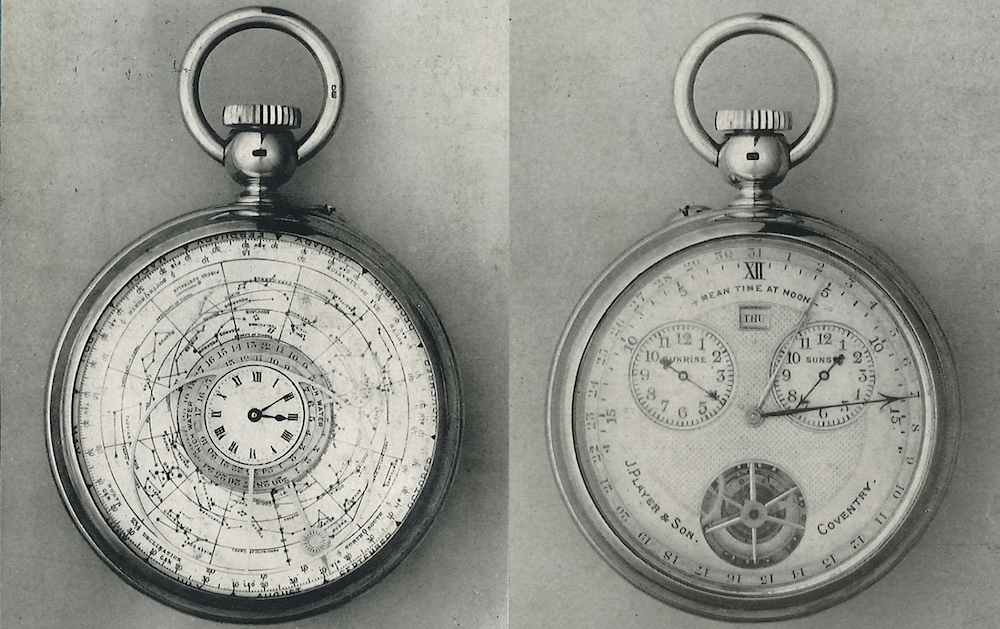
J.P. Morgan wore one of the most extraordinary watches ever made — a double-sided astronomical device crafted by J. Player & Sons.
They acted as if patterns — psychological, seasonal, political, even celestial — governed the rise and fall of empires.
And they positioned themselves accordingly.
The era they ruled was the first Gilded Age — a time of technological revolution, concentrated wealth and hidden fragility.
Railroads and electricity transformed society. Fortunes soared. Debt piled higher beneath a veneer of progress.
But “gilded” doesn’t mean golden. It means gold-plated — a thin sheen covering structural cracks.
Today’s markets feel strikingly similar.
While the last Gilded Age ended in panic, this one won’t end politely either.
The question isn’t if a break comes. It’s when.
Because markets don’t move in straight lines. They surge, stall and snap. When psychology, leverage and momentum align, history doesn’t gradually change.
Sometimes, it turns on a dime.
The Zodiac Club still exists today — though it looks different.
There are no handwritten ledgers now. Instead, modern titans rely on sophisticated models passed quietly between people who cannot afford to be surprised.
Different technology. Same obsession: the date on the calendar where everything flips.
Right now, the cycle is tightening again.
You can see it in markets levitating on a handful of names… in volatility disappearing just before it returns… in the confidence that everything is stable while the foundation quietly shifts beneath it.
As they have since the Zodiac Club’s founding, on the last Saturday of the month, modern titans will meet again to chart their next moves.
More than a century ago, you would never have made it through the entrance.
Today, you don’t need permission. But you do need something else: foresight.
Because the titans of today — just like the titans of old — are still moving in rhythm with forces most don’t see… or refuse to.
They will not be blindsided.
And you shouldn’t be either.

Boom for Whom?
Posted April 13, 2026
By Matt Insley

Delta: We Bought a Refinery
Posted April 10, 2026
By Matt Insley

1-800-CAL-MOVE
Posted April 08, 2026
By Matt Insley

The Green New Scam Exposed
Posted April 03, 2026
By Matt Insley

Supply Chain Cracks and Crumbles
Posted April 02, 2026
By Matt Insley