Posted September 18, 2026

By Matt Insley
Wednesday’s OTHER D.C. Vote
Wall Street spent Wednesday afternoon fixated on the Federal Reserve.
That’s when Kevin Warsh and his colleagues voted unanimously to raise the federal funds target range by a quarter point, to 3.75–4.00%. The explanation wasn’t complicated. Inflation remains above the Fed’s 2% goal.
But there was another vote in Washington on Wednesday that deserves some attention.
The House voted 417–3 to pass the Ratepayer Protection Act, legislation aimed at keeping households and small businesses from footing the bill for the enormous amounts of new electricity infrastructure required by data centers.
The three holdouts were Democrats Summer Lee of Pennsylvania, Delia Ramirez of Illinois and Rashida Tlaib of Michigan. At least Tlaib opposed the measure from the other direction, arguing that it didn’t go far enough to rein in data-center development.
All this as last week’s Consumer Price Index (CPI) report showed inflation running at 3.4% over the 12 months ending in August, while electricity prices rose even faster, up 3.8%.
That puts electricity among the household expenses rising faster than the overall cost of living.
Now consider what’s happening to electricity demand.
After about 15 years of little growth, U.S. power consumption has started climbing again. The Energy Information Administration says electricity demand grew an average 1.7% per year from 2020–2025, compared with just 0.1% annually from 2005–2019.
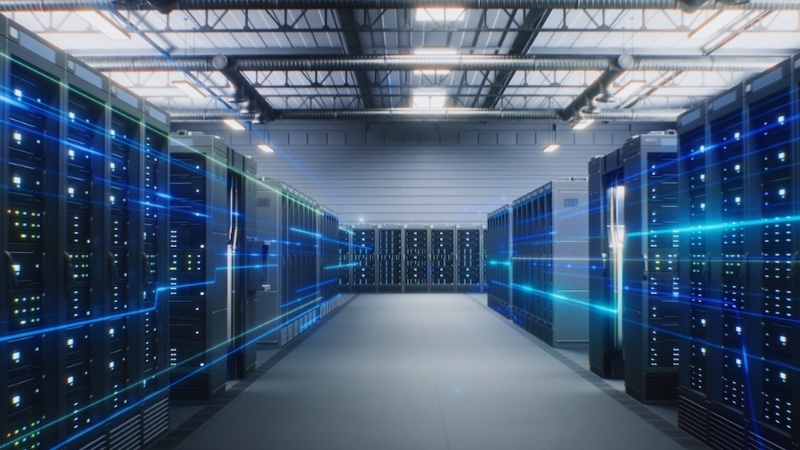
One reason is sitting inside those sprawling windowless buildings going up across Virginia, Texas, Ohio and other parts of the country.
Your Rundown for Friday, September 18, 2026...
The (Power) Hunger Games
Lawrence Berkeley National Laboratory estimates data centers could consume about 11.8% of all U.S. electricity by 2030 under its central estimate. Depending on the pace of development, their share could range from 9.5–15.3%.
All of that computing power requires actual power. And supplying it would mean new generation, transmission lines, substations and other grid infrastructure.
The question now being fought over in state capitals and Washington is who pays for it.
That’s what Wednesday’s 417–3 House vote was about.
The Ratepayer Protection Act would require state utility regulators to consider whether large electricity users should bear the costs of the infrastructure needed to serve them rather than shifting those costs onto other customers.
Researchers at the Federal Reserve Bank of Dallas recently tried to measure what the data-center boom could do to electricity prices.
They estimate existing data centers have already raised average wholesale electricity prices 3–5% nationwide, with larger effects in major data-center regions.
Under a moderate build-out scenario, wholesale electricity prices could be about 20% higher by 2028 than they otherwise would have been.
That gets us back to Wednesday.
The Fed raised interest rates because inflation is too high. Meanwhile, the House voted 417–3 on a problem that could put more pressure on one of the prices Americans pay every month.
And household electric bills are only part of the story.
The Dallas Fed notes that its inflation estimates capture the direct effect of higher electricity prices on consumers. They don’t account for what could happen when businesses themselves pay more for power.
Data centers aren’t competing for some special supply of “AI electricity.” They’re plugging into the same power system that serves factories, warehouses, hospitals, stores and homes.
How much of those additional costs eventually gets passed along is impossible to know today.
But the debate over who pays for the AI power boom has already reached Washington.
For years, the AI race was measured in chips, models and trillion-dollar technology companies.
Now we’re starting to get the bill.
Market Rundown for Friday, Sept. 18, 2026
S&P 500 futures are slightly in the green at 7,705.
Oil is down 0.35% to $101.50 for a barrel of WTI.
Gold is down 0.25% to $4,412 per ounce.
And Bitcoin’s up 2%, just under $78K.

No Gamble, No Future
Posted October 09, 2026
By Matt Insley

Bloodshed Draws Rubberneckers
Posted October 07, 2026
By Emily Clancy
After SaaS, Private Credit Bets on AI
Posted October 05, 2026
By Matt Insley

Jim Rickards: 33 Days to Midterms
Posted October 01, 2026
By Matt Insley

“A Closet Liberal, IMO.”
Posted September 30, 2026
By Matt Insley